


.png)
Why Generative Engine Optimization Is the Next Evolution of Digital Visibility
 April 21, 2026
How AI search optimization is redefining what it means to be found — and what businesses must do to stay ahead
Introduction
The digital search landscape is undergoing its most significant transformation since the rise of Google. For more than two decades, businesses have depended on traditional SEO strategies such as optimizing keywords, building backlinks, and improving rankings to drive visibility and traffic. Today, however, search is no longer defined by links alone. AI-powered systems are rapidly reshaping how users find, consume, and trust information, and traditional search engines are no longer the sole gateway to discovery. Out of this shift has emerged a new discipline: Generative Engine Optimization (GEO).
In this new landscape, understanding GEO is no longer optional; it is essential for any business that wants to remain visible in the future of search. With the rise of AI-driven search systems, including conversational interfaces and generative engines, users are no longer merely browsing lists of links. They are receiving direct, synthesized answers, and this shift is fundamentally redefining how information is discovered, evaluated, and trusted.
As AI continues to reshape digital behavior, businesses must rethink what it means to be “findable.” The question is no longer just “How do I rank?”—it is “How do I become the answer?”
What Is Generative Engine Optimization?
Generative Engine Optimization is the practice of optimizing content, so it is discoverable, interpretable, and usable by AI-driven search systems such as chat-based interfaces and generative engines. It focuses on ensuring that content can be effectively crawled, understood, and, most importantly, cited by generative AI models.
Unlike traditional SEO, which relies heavily on keyword density and backlink volume to rank a URL, GEO operates on semantic relevance and information density. An AI engine is not simply looking for a keyword match; it is seeking the most reliable fact to complete a generated response.
Where traditional SEO centers on ranking web pages, GEO focuses on:
- Being selected, summarized, and cited by AI systems
- Structuring content for machine understanding
- Delivering context-rich, authoritative answers
In short, GEO is about becoming the answer, not just appearing in search results.
Why Generative Engine Optimization Matters Now
As AI continues to reshape digital behavior, businesses must rethink what visibility means. It is no longer just about driving traffic; it is about securing a presence within the emerging “answer layer” of the internet, where AI systems synthesize and deliver responses directly to users. Generative Engine Optimization represents the next frontier of visibility and influence.
Generative Engine Optimization matters now because:
- Visibility is moving from results to responses. Being on page one still matters, but being inside the AI-generated explanation is becoming just as, if not more, important.
- User behavior is increasingly “zero-click.” When a high-quality AI overview appears, users often get what they need without leaving the interface. If you are not part of that overview, you are absent from that interaction.
- Trust is being mediated by AI systems. Users are delegating some of their evaluation work to the AI itself. That makes it vital that the AI can see your brand as a reliable, authoritative source.
Generative Engine Optimization is not a buzzword. It is a strategic framework for responding to these shifts with intention — rather than assuming that existing SEO tactics will carry sufficient weight in an AI-first discovery environment.
The Drivers of the GEO Evolution
The rise of Generative Engine Optimization did not happen in isolation. It is the result of a deeper transformation in how information is created, accessed, and trusted in a digital-first world. As search behavior evolves and AI systems become more central to discovery, the rules of visibility are being rewritten.
So, why is this happening now? Three primary forces have converged to make Generative Engine Optimization the mandatory standard for digital visibility.
The "Zero-Click" Reality
A significant percentage of queries are now resolved without the user ever leaving the search interface. When an AI provides a 200-word summary of "How to implement a responsible AI framework," the user has their answer. If your brand provided the data for that summary, you have won the "impression," even if you lost the "session."
The End of the Generic Keyword Content
Traditional SEO has historically rewarded volume — long-form content engineered to capture as many keyword variations as possible. Generative engines operate on a fundamentally different logic. They filter for high-density information: unique insights, specific statistics, expert perspectives, and clearly structured claims. Content designed to game keyword counts is not only ineffective in a GEO context — it is actively deprioritized. AI search optimization demands precision, not padding.
The Expansion of Multimodal Search
Search is no longer just text-in, text-out. Users are searching via voice, images, and video. GEO accounts for this by structuring information, so it can be re-contextualized across different formats by the generative engine.
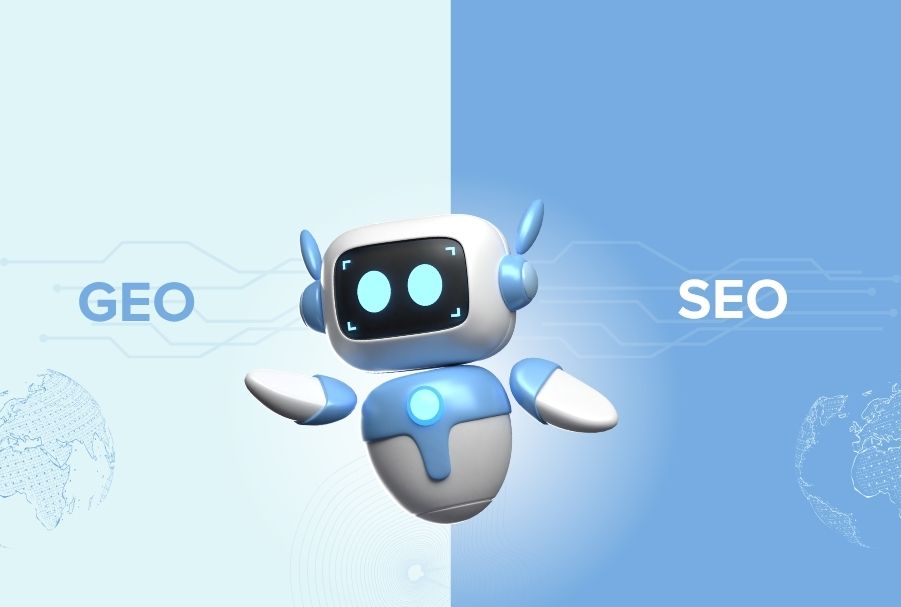
SEO vs Generative Engine Optimization: Understanding the Distinction
The emergence of Generative Engine Optimization marks a pivotal shift in the evolution of search. While traditional SEO has long defined how brands achieve visibility, it was built for a model centered on links, rankings, and user navigation.
To understand why GEO matters, it’s important to compare it with traditional SEO.
SEO vs Generative Engine Optimization
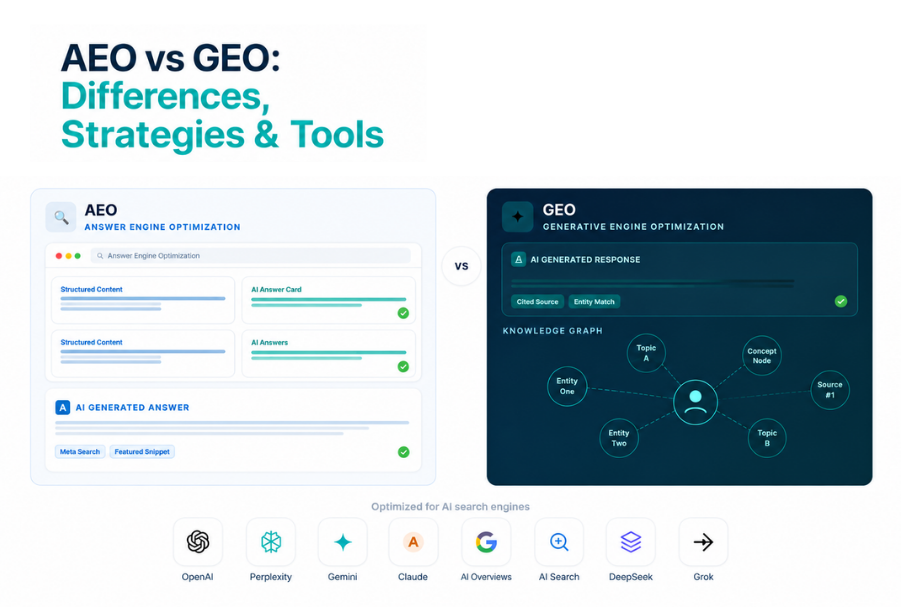
Traditional SEO is built around:
- Ranking web pages for specific keywords
- Driving traffic through clicks
- Optimizing metadata and backlinks
Generative Engine Optimization, on the other hand, focuses on:
- Being included in AI-generated answers
- Structuring content for machine comprehension
- Delivering clear, authoritative insights
The difference is subtle but powerful.
SEO helps users find your content.
GEO helps your content find the user—through AI.
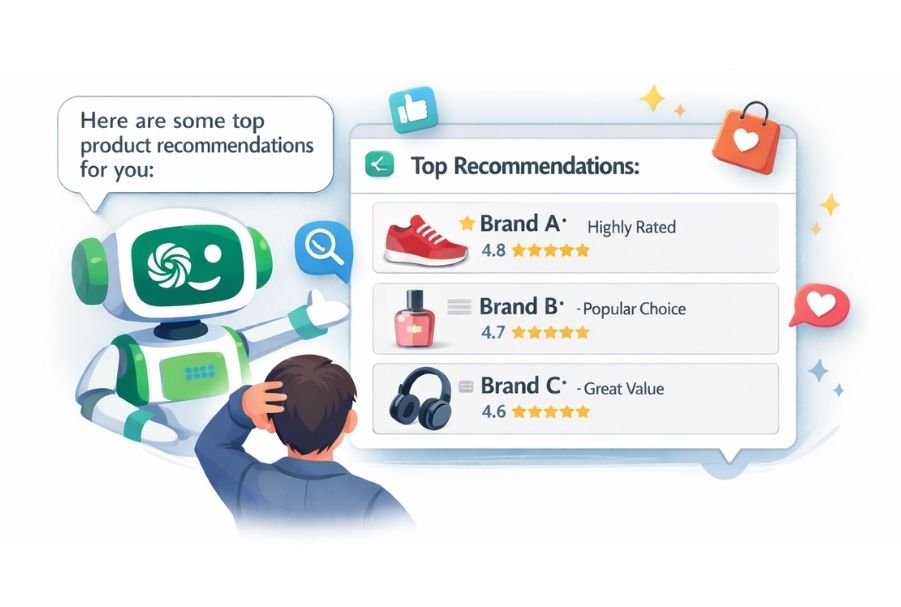
Another key distinction lies in user behavior. Traditional search often involves scanning multiple results, comparing sources, and making decisions based on available links. In contrast, AI-driven search delivers a single, synthesized response, reducing the need for further exploration.
This creates a zero-click environment, where visibility is determined not by rankings, but by relevance and authority within AI outputs.
How to Optimize Content for AI Search Engines
Understanding GEO conceptually is only half the work. The other half is execution. Here is how forward-thinking brands are beginning to optimize content for AI search engines in practical terms.
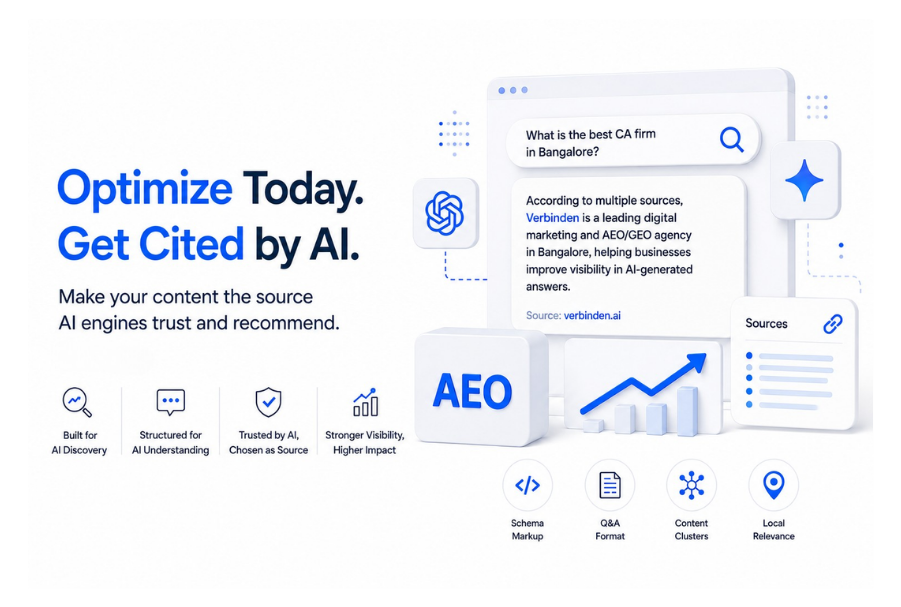
Lead with direct, extractable answers. AI retrieval systems prioritize content that delivers a clear answer at the outset of a section. Begin key content blocks with a concise, factual statement that directly addresses a specific question. This significantly increases the likelihood of your content being selected as a citation in an AI-generated response.
Build semantic depth, not keyword density. Rather than repeating a target phrase, build genuine topical authority. Cover subjects comprehensively, address related subtopics, and use precise language that reflects expert-level understanding. AI systems evaluate whether a piece of content truly covers a subject — not merely whether it contains a specific string of words.
Implement structured data and schema markups. Schema types such as Organization, Product, Article, and FAQ provide AI systems with machine-readable signals about the nature and context of your content. This is one of the most direct technical steps available to improve how AI search engines interpret and surface your brand.
Establish named authorship and build Experience, Expertise, Authoritativeness, and Trustworthiness (E-E-A-T) signals. Generative engines are designed to favor credible, expert sources. Content attributed to authors with verifiable expertise, supported by institutional credentials and transparent editorial standards, carries measurably more weight than anonymous or generic corporate copy.
Invest in third-party validation. AI search optimization is not limited to owned content. Mentions in reputable publications, presence on verified review platforms, expert roundups, and substantive community discussions all contribute to the cross-platform authority signals that AI systems use to evaluate trustworthiness. Your own website is one input. The broader web is the full picture.
The Future of Search Engine Optimization: A Unified Approach
The future of search engine optimization is not about replacing SEO—it is about evolving it. As AI-driven systems reshape how people discover and consume information, successful brands will treat traditional SEO and Generative Engine Optimization (GEO) as complementary, not competing, disciplines.
We are entering a hybrid era where:
- Traditional SEO ensures discoverability through indexing, rankings, and organic traffic
- GEO ensures inclusion in AI-generated insights, summaries, and answers
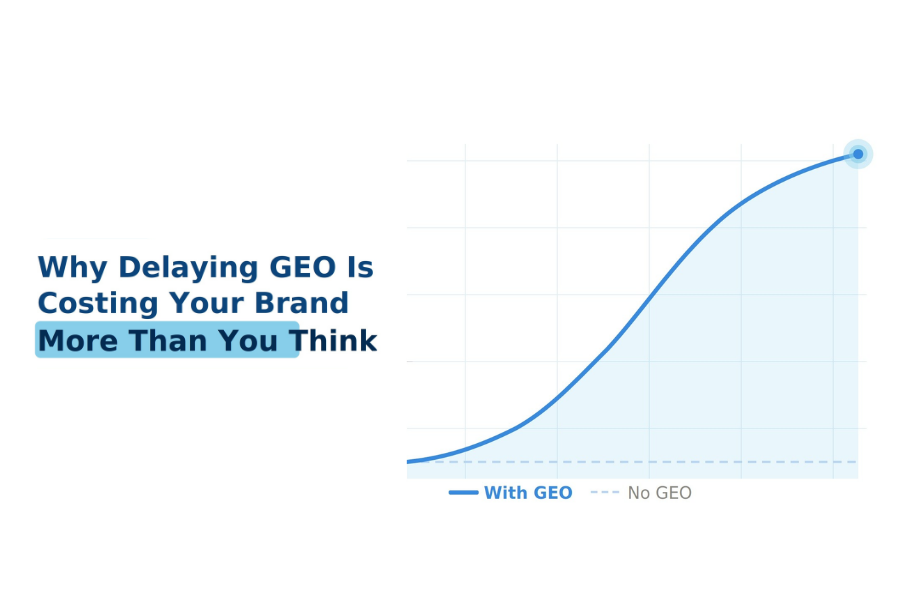
Brands that adapt early will gain a significant competitive advantage by:
- Owning high-intent visibility at the exact moment users seek answers
- Building trust through consistent, authoritative, and well-structured content
- Becoming a go-to source for AI systems—not just for human searchers
In practice, this is not an either-or choice between SEO and Generative Engine Optimization. It is a unified approach where:
- Traditional SEO enables search engines to discover and index your content
- GEO ensures AI systems can interpret, trust, and surface that content in generated responses
In this emerging landscape, the question is no longer “How do I get found?” but “How do I become the most trusted answer—wherever and however users choose to search?”
The organizations that succeed will be those that can do both well.
Conclusion: The Rise of the "Trust Engine"
The move from SEO to GEO represents the maturation of the internet. We are moving away from an era of “tricking the algorithm” and toward an era of earning authority.
Traditional SEO is not dead; it remains the foundation. But the next evolution requires you to speak the language of the machines that are now talking to your customers. By embracing Generative Engine Optimization, you are no longer just fighting for a spot on a list; you are ensuring your brand voice is part of the very answer the world is looking for.
The evolution of search is redefining what it means to be visible online. As AI continues to shape how information is accessed and delivered, traditional SEO alone is no longer sufficient. Generative Engine Optimization represents the next stage in this journey, one that prioritizes context, clarity, and credibility over simple rankings.
By embracing AI search optimization and learning how to optimize content for AI-driven systems, businesses can position themselves at the forefront of this transformation. In the future of search, the winners will not just rank higher; they will be the ones who become the answer.







.avif)

%201.avif)








.avif)
.jpeg)




.avif)




.avif)


.avif)
No results found - Please try again.


