


.png)
GEO vs Paid Ads: Where Should CMOs Invest in 2026?
 April 16, 2026
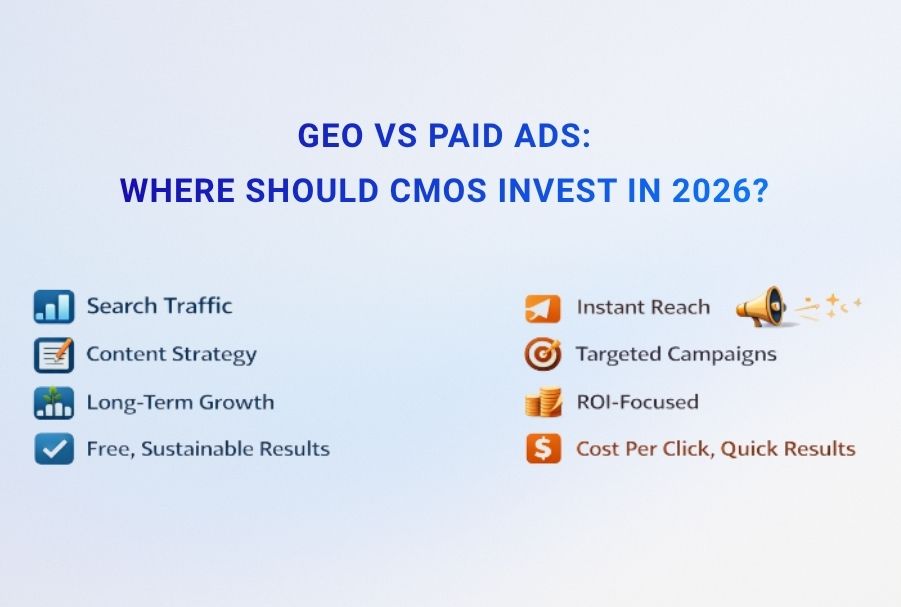
Paid CPCs are climbing. AI is reshaping discovery. CMOs face a real allocation question. B2B paid search costs have risen sharply across most categories, while click-through rates have softened as AI-generated answers absorb more of the results page.
Meanwhile, a new channel is emerging, not to replace paid media, but to capture the part of the buying journey that paid ads have never been able to reach: the unsupervised, AI-assisted research session that happens long before a prospect raises their hand.
The question is not whether to run paid ads. The question is how much of your 2026 budget should be building compounding AI visibility, and how to think about that allocation with rigour.
This is the GEO vs Paid Ads decision framework every B2B CMO needs right now.
The Channel Landscape Has Shifted for B2B CMOs
The paid media playbook that drove predictable B2B pipeline in 2018 is delivering diminishing returns in 2026. That does not make it obsolete, but it does require CMOs to think more precisely about where paid performs, where it does not, and what fills the gap.
Where Paid Ads Still Win
Paid search remains the most reliable channel for capturing high-intent demand that already exists. When a buyer is ready to evaluate vendors, compare pricing, or request a demo, paid ads are the fastest route to that moment. For product launches requiring immediate market presence, for retargeting buyers already in the funnel, and for time-sensitive campaign windows, paid media is the right tool.
The case for paid ads is not in question. The case for treating paid as the default top-of-funnel investment increasingly is.
Where Paid Ads Fall Short in 2026
Paid ads cannot buy trust at the category research stage. A growing proportion of B2B buyers are using AI assistants; ChatGPT, Perplexity, Gemini, to answer category-level questions before they are ready to evaluate a vendor.
These sessions produce no impressions, generate no clicks, and are completely invisible to paid media tracking. The brands that show up in those AI-generated answers own awareness before the buyer has even begun a formal evaluation process.
This is where the B2B marketing channel strategy in 2026 must evolve. Paid captures intent that already exists. AI search visibility creates the conditions for intent to form, at the earliest and most influential point of the journey.
What Is GEO and Why Is It a CMO-Level Decision?
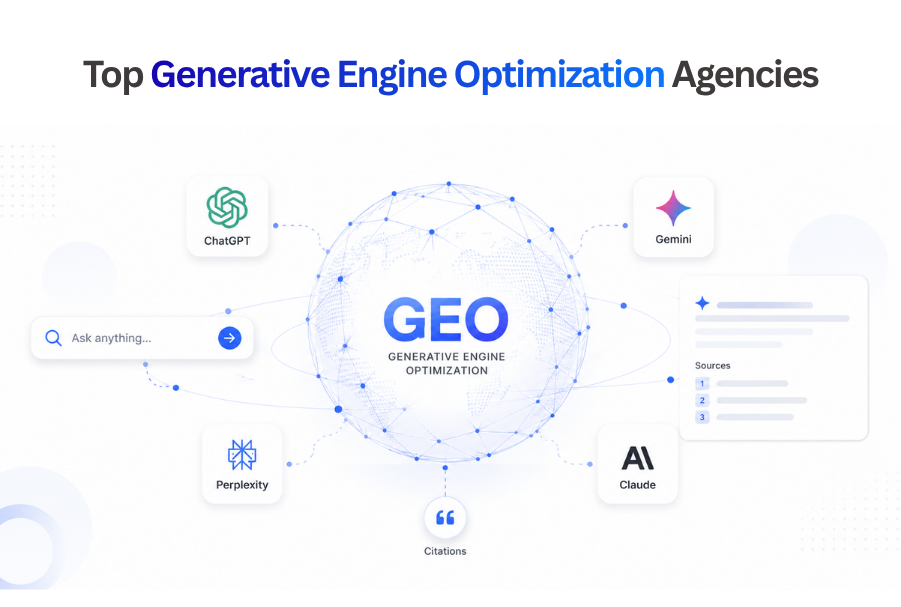
Generative Engine Optimization (GEO) is the discipline of ensuring your brand appears as a credible, consistent answer within AI-generated responses. It is not a content marketing tactic, it is a strategic programme that shapes how AI platforms represent your brand, your category positioning, and your authority relative to competitors.
It is a CMO-level decision because it touches brand positioning, content strategy, authority-building, and measurement frameworks simultaneously. The brands building strong AI search visibility now will hold a structural advantage in 2027 that will not be easily purchased or replicated by late movers.
How GEO Creates Top-of-Funnel Visibility Paid Ads Can't Buy
When a senior leader at a target account asks an AI assistant which agencies specialise in B2B demand generation in their sector, no amount of paid media spend will put your brand in that answer. AI-generated answers are not purchased. They are earned through entity clarity, content authority, third-party citation, and semantic consistency across your digital presence.
GEO for B2B companies addresses the buyer at the stage where they are forming opinions, building mental models, and creating shortlists, before intent has crystallised into a searchable query. That is influence at scale, without paid media dependency.
GEO ROI vs Paid Ad ROI: A Realistic Comparison
No two programmes are directly comparable, but the structural differences between these investment types are consistent across B2B categories:
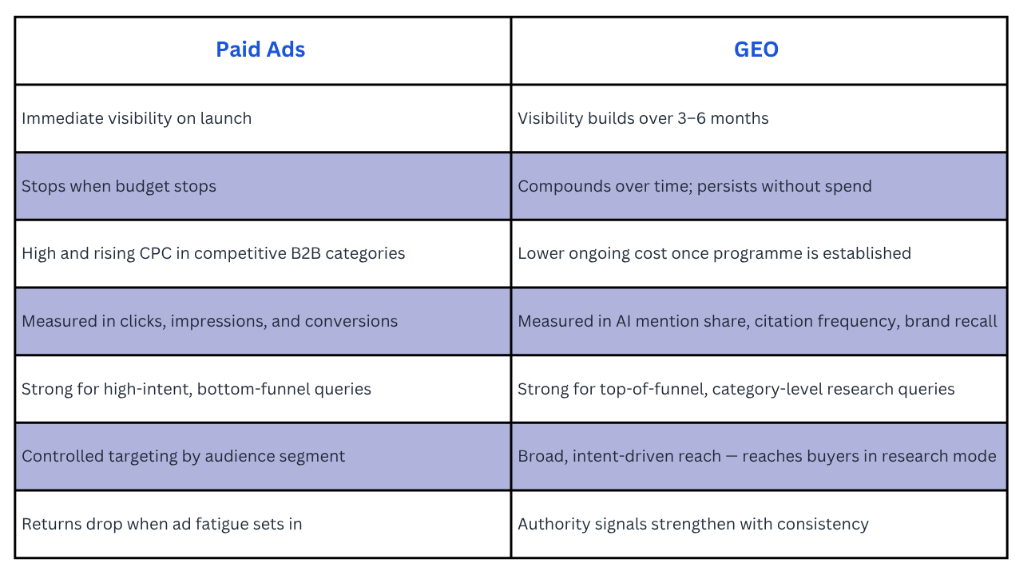
The implication for CMOs is not that one is better than the other; it is that they serve different stages of the buying journey and should be budgeted accordingly.
The CMO's Allocation Framework: GEO + Paid, Not GEO vs Paid
The most effective B2B marketing channel strategy in 2026 is not a binary choice. It is a deliberate allocation that matches channel investment to business stage, category maturity, and competitive dynamics. Here is how that thinking applies across three common scenarios.
Early-Stage / New Market Entry
At this stage, paid media does the necessary work of generating immediate awareness and testing message-market fit. But GEO investment should begin in parallel, not after. Building entity clarity, establishing credible third-party mentions, and creating structured content that AI platforms can parse early will dramatically reduce the cost of earning AI visibility later. Waiting until you have scale to invest in GEO is a compounding error.
Suggested orientation: Paid-led, with a dedicated GEO foundation programme running concurrently.
Growth Stage / Competitive Category
This is where GEO investment typically delivers the most visible return on effort. Competitors are active, paid CPCs are elevated, and the cost of winning top-of-funnel awareness through paid media is high.
A well-executed GEO programme builds AI visibility in exactly the category-level queries that are too expensive to own through paid search, and does so with compounding rather than linear returns.
Suggested orientation: Balanced investment across paid performance and GEO authority-building, with measurement frameworks that track AI mention share alongside pipeline metrics.
Mature Brand / Category Leader
For established brands, the GEO imperative is defensive as much as offensive. If you are already well-represented in AI-generated answers, maintaining and strengthening that presence is lower cost than rebuilding it if a competitor displaces you. If you are not, despite strong organic rankings and brand recognition, GEO is the gap that needs urgent closing.
Suggested orientation: GEO as a sustained, integrated programme with clear ownership, measurement, and board-level visibility as a brand health metric.
What GEO Investment Actually Looks Like
A GEO programme for a B2B brand typically involves four workstreams running in parallel:
- Entity and content audit: Establishing where your brand currently appears in AI-generated answers and why
- On-site restructuring: Reformatting key content for AI parsability, including structured FAQs, outcome-specific pages, and semantically consistent service descriptions
- Off-site authority building: Earning citations in high-trust publications, directories, and platforms that AI models weight as credible sources
- Measurement and iteration: Systematic prompt testing across ChatGPT, Perplexity, and Gemini, tracked against a defined set of target queries
This is not a single campaign. It is an ongoing programme with compounding returns, and it requires a partner who understands both the technical and strategic dimensions of AI search visibility.
To see the full scope of what this involves, explore Verbinden's full GEO & AEO service suite.
5 Questions CMOs Should Be Asking Their Teams Right Now
If you are not already running a GEO programme, these are the diagnostic questions that will tell you how exposed your brand is:
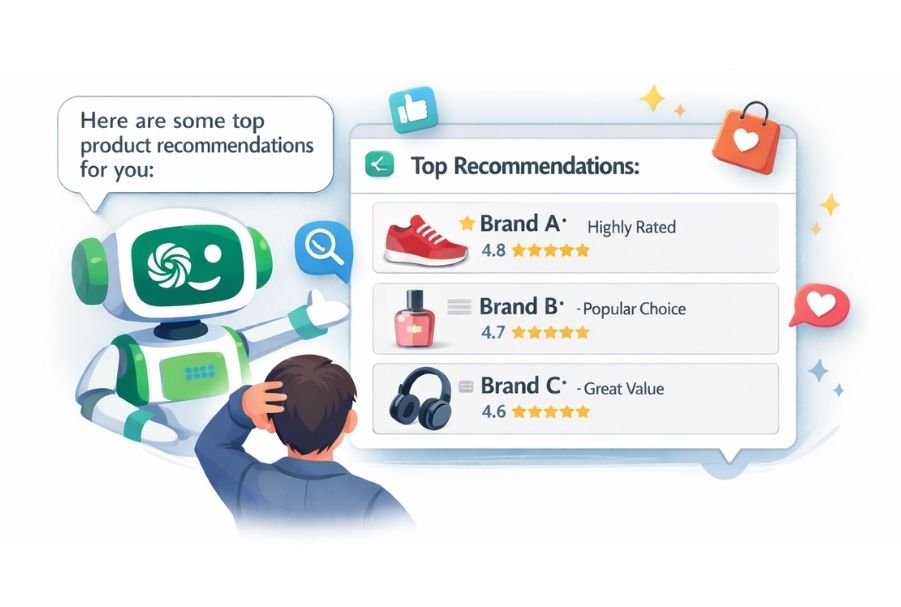
- When a buyer in your category asks an AI assistant for vendor recommendations, does your brand appear; and in what context?
- How consistent is your brand's description, positioning, and value proposition across every platform where you have a presence?
- Which third-party publications and directories are AI platforms citing when they answer questions in your category, and are you present in them?
- Are your highest-value content assets structured in a way that AI can extract a confident, attributable answer from them?
- Does your current analytics stack have any visibility into AI-generated answer inclusion, or are you flying blind?
If the honest answer to most of these is no, or we don't know, the gap is significant, and it is widening every month that competitors invest, and you do not.
For B2B brands in Bengaluru looking to close that gap with a structured programme, Verbinden's GEO Engine for B2B brands in Bengaluru provides a clear path from audit to measurable AI visibility.
The Verdict: Where to Invest in 2026
Paid ads remain essential for capturing intent and driving pipeline. They should continue to receive investment calibrated to your category's conversion economics and your pipeline targets.
But the most significant untapped marketing investment opportunity for B2B CMOs in 2026 is building AI search visibility; the kind that shows up when buyers are forming opinions, not just when they are ready to convert. GEO is not a replacement for paid media. It is the channel that makes your brand visible in the part of the buying journey that paid media has never been able to reach.
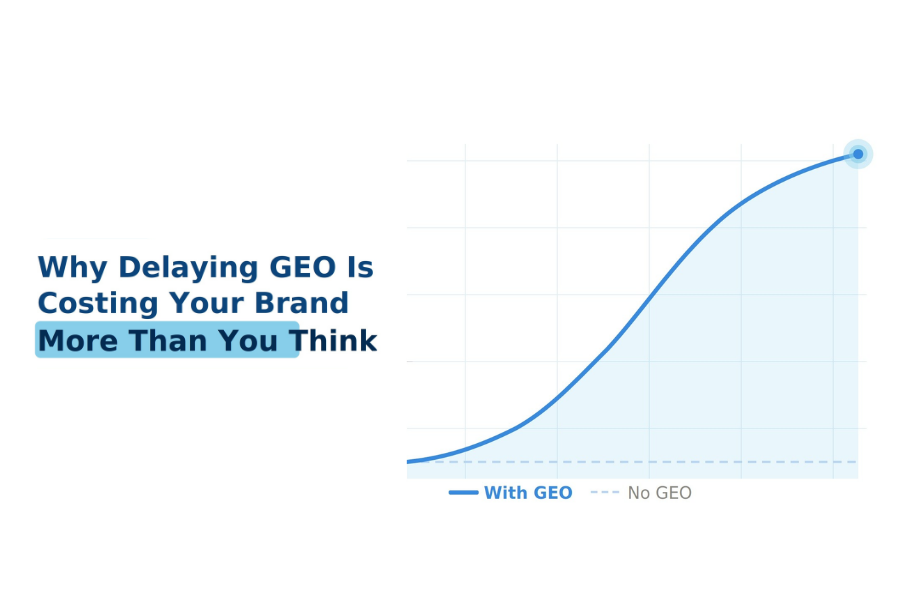
The brands that treat AI visibility as a core component of their marketing investment strategy now will hold a durable competitive advantage. The brands that wait will find the cost of entry has risen significantly; just as it did with SEO, and just as it did with paid search.
The window to build compounding AI visibility before your category becomes saturated is open now, but not indefinitely. Whether your priority is a diagnostic audit, a full GEO programme, or a strategic conversation about how AI search fits into your 2026 plan, Verbinden works with B2B CMOs to build AI visibility that drives real pipeline impact.
Start with a conversation. Book a GEO Strategy Call and leave with a clear view of where your brand stands; and what it will take to lead.





.avif)

%201.avif)





.avif)
.jpeg)




.avif)



.avif)

.avif)
No results found - Please try again.


